

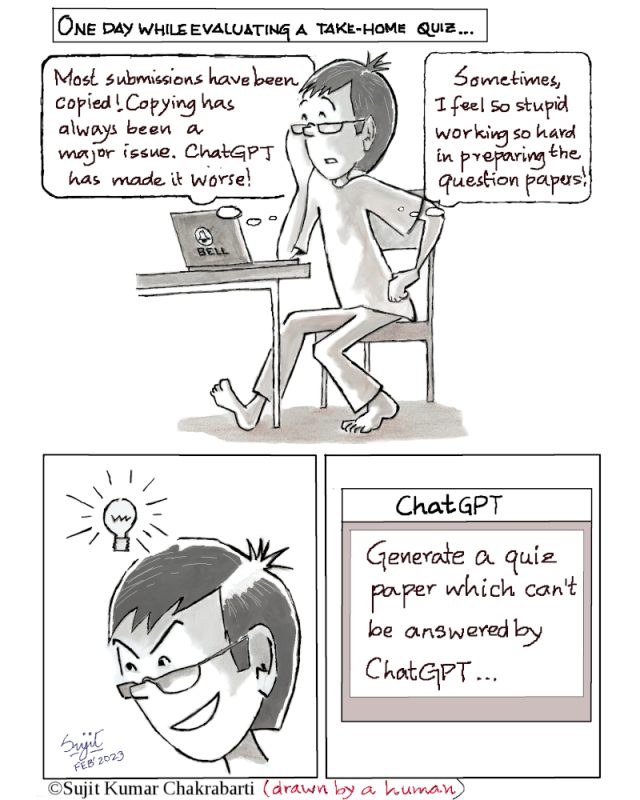
One Among Us: ChatGPT

ChatGPT by Sujit Kumar Chakrabarti
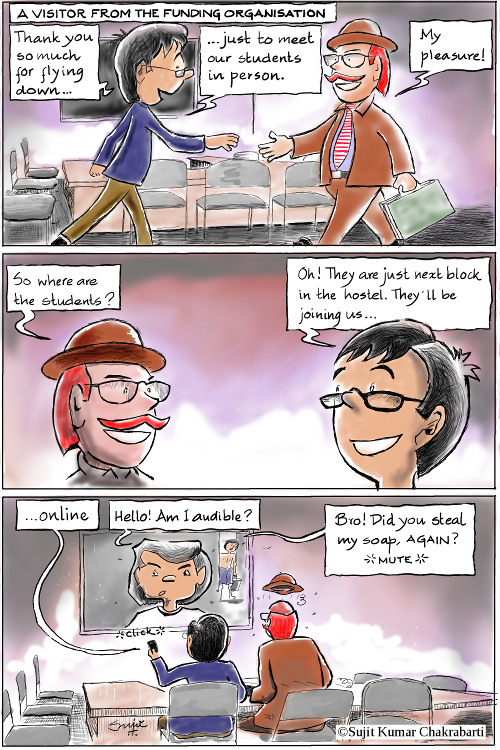
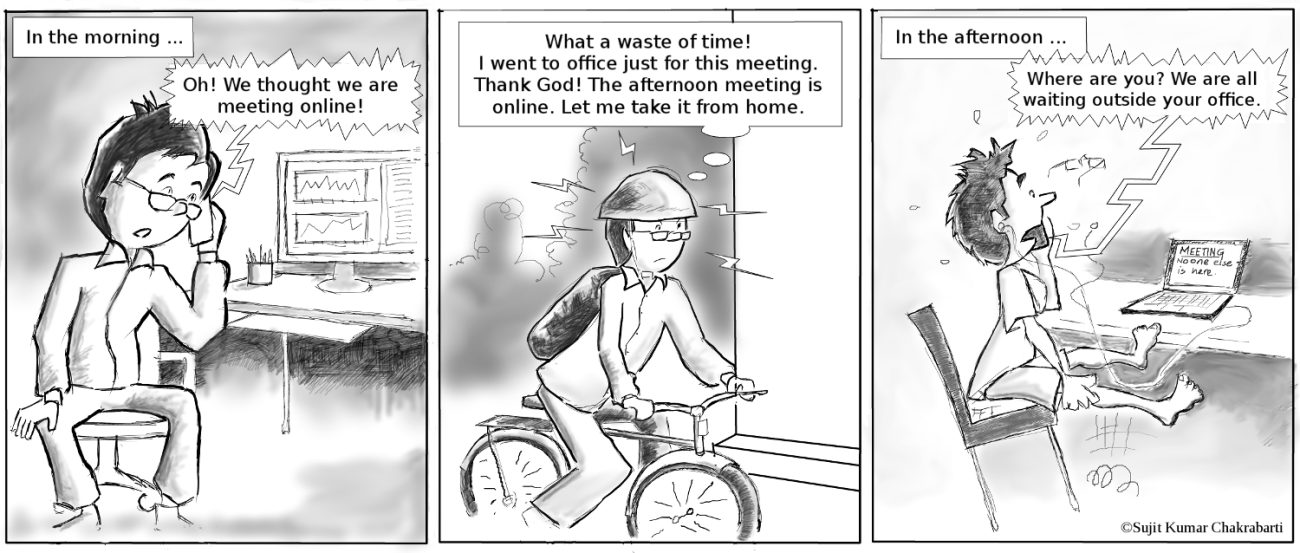
“Online or Offline (Part 2)” by Sujit Kumar Chakrabarti
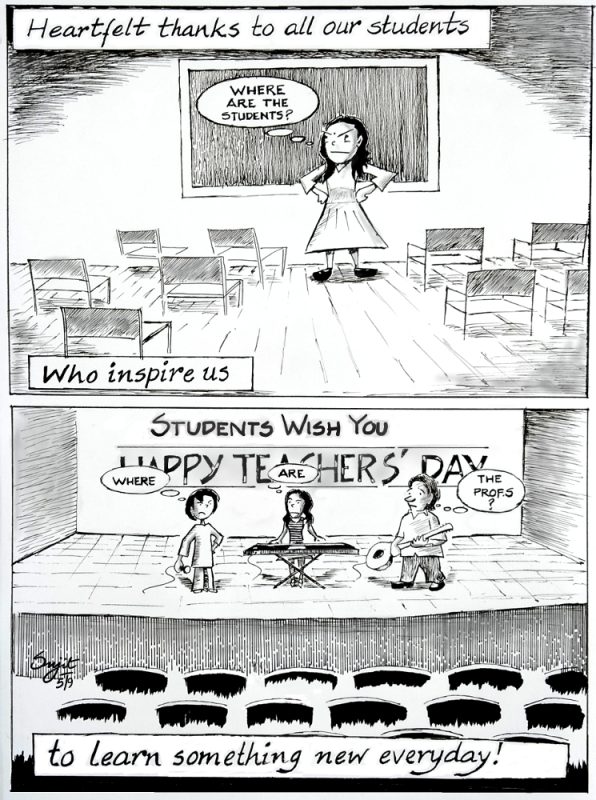
Teachers’ Day 2022: A cartoon by Sujit Kumar Chakrabarti
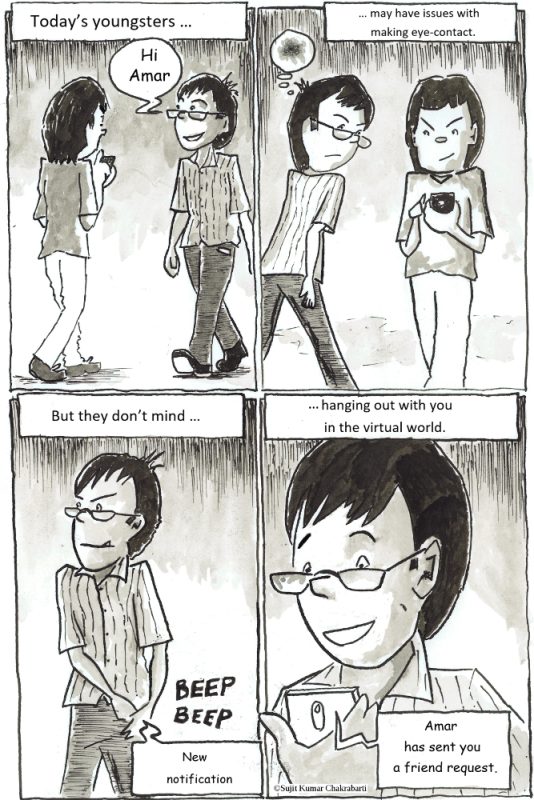
Virtual Socialisation: A cartoon by Sujit Kumar Chakrabarti
Mentorship experiences of Prof. S. Sivaram
“Only when you do a PhD, you get paid for doing something you enjoy doing and you also get a degree at the end.” This is the philosophy with which I work, trying to give each student the time they need, helping them to work at their own pace. I am happy to work overnight to comment on a manuscript from a workaholic student, to allow the highly self-critical and thorough student to take months for one analysis, to discuss science and gossip with a student who is like family, to be a little formal with a student who likes to keep a distance or to wake up in the middle of the night to receive a call from student who is going through a panic attack. After all, it takes all kinds of flavours to make a dish savoury!
This is a collaborative writing endeavour by a group of students and the teacher of the Sociology of Gender course (2021), department of Sociology, University of Hyderabad, Hyderabad. The student authors are listed alphabetically, followed at the end by the teacher.
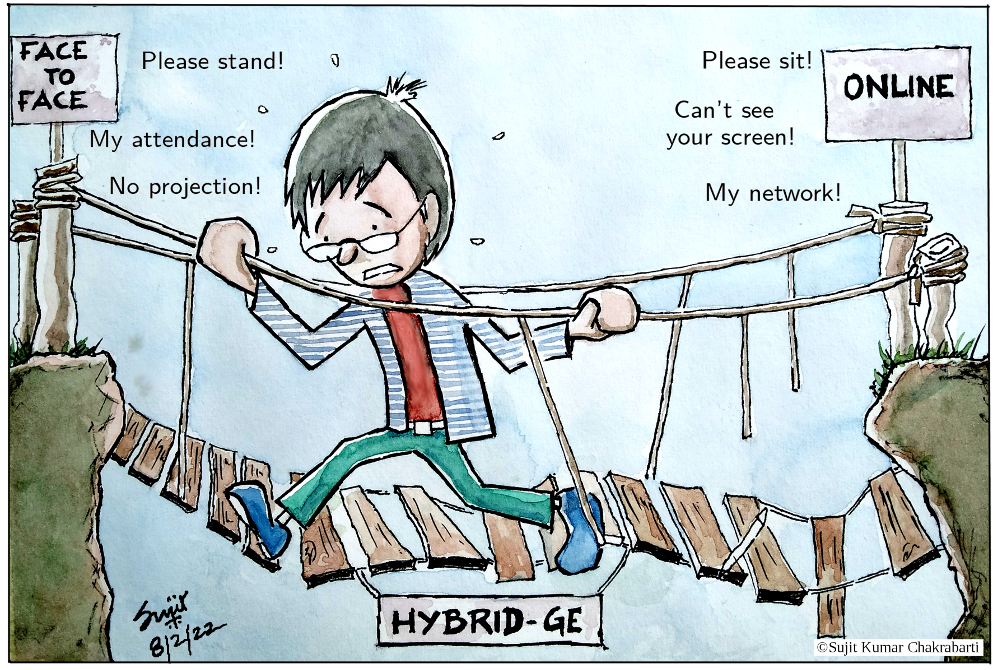
The Trials of Hybrid Teaching by Sujit Kumar Chakrabarti
It is more important to ask “why and how” rather than being content with “what”. But, unfortunately, we Indians are generally obsessed with “what”. The challenge of a teacher/mentor is to ignite bright minds; to stimulate them. A mentor must be kind, considerate, observant, thoughtful, and after all, enthusiastically responsive.
Science in general and mathematics in particular is for creative thinkers. One must give total freedom to researchers to choose his or her area of research. Science, including mathematics, has always produced and will continue to produce useful work if the creative thinkers are given complete freedom.
The social worlds of mentor and mentee structure the power via so-called modernized educational institutions. The traditional knowledge system was also based on the power and hierarchy of caste. Though public educational institutions are valorized for its power to overcome caste-based conflict and education (Beteille 2006:174), the contradicting forms of powers related to caste and education function in two ways.
The problems in mentor-mentee relationship in our society has been discussed from an experience based approach. Mentors should become special friends to the mentees and might eventually rise to the level of friend, philosopher and guide. However, all seeds do not make big trees. So, a friend plus position for the period of cooperation is good enough. Mentor and mentees may be close in age like classmates or they may have age gap of one or two generations. Mentees like to see mentors to be slightly advanced co-thinker of the problems faced by them.